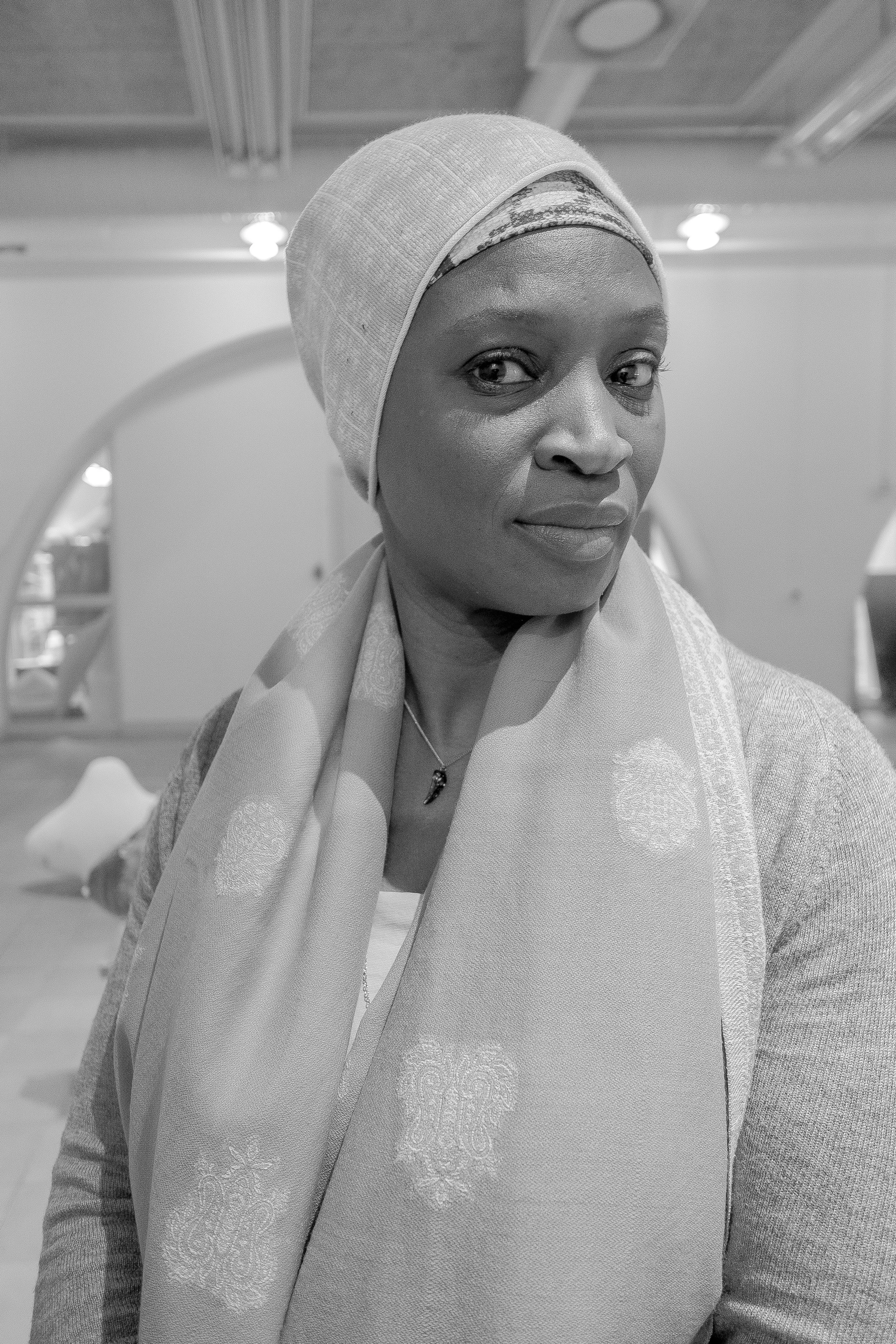
Drawing, for me, begins through contact: pigment entering fiber, pressure meeting surface, marks accumulating into systems of relation and exchange. Working across drawing, sculpture, and installation, I investigate inscription as a material process through which histories of movement, labor, extraction, and environmental transformation become embedded within bodies, landscapes, architectures, and networks of circulation. I approach the line not simply as representation, but as route, trace, scar, and spatial system.
I work with materials including indigo, kola nut, charcoal, gold, synthetic hair, and paper, each carrying layered histories of cultivation, extraction, trade, migration, and use. These materials are not passive mediums but active agents that shape how marks emerge, accumulate, disperse, and persist. Pigments stain and seep. Fibers absorb and release. Gold is layered, abraded, and partially erased. Synthetic hair extends the body into sculptural and spatial form. Through layering, saturation, suspension, repetition, and fragmentation, the work examines how matter retains pressure over time and how histories remain materially present within the substances that carry them.
My research draws from African systems of inscription including Nsibidi, Uli, Bamum, and Ge'ez, where drawing and writing operate simultaneously as image, script, spatial logic, and social structure. These systems collapse distinctions between language and embodiment, image and movement, mark and place. These investigations extend into questions surrounding migration, territorial marking, infrastructure, and political space. Trade routes, shipping lanes, roads, scarification, surveillance systems, and architectures of extraction recur throughout the work as interconnected forms of marking through which colonial histories and contemporary systems of circulation continue to shape lived experience.
Recent projects extend drawing beyond the surface into architecture, installation, and sculptural form. Suspended structures, layered accumulations, and spatial systems of mark-making allow drawing to function less as image than as condition. Across these works, contact, erosion, fragmentation, and the pressure of history remain visible.
My work has been exhibited internationally at the 61st International Art Exhibition of La Biennale di Venezia, curated by Koyo Kouoh, as well as at the Centre Pompidou, Menil Drawing Institute, Sharjah Biennial, and Dak’Art Biennale. My work is held in collections including the British Museum, the National Museum of African Art, the Studio Museum in Harlem, and the Menil Collection. Drawing, in my practice, is not a preparatory act but a material and spatial system through which histories of movement, contact, and transformation remain active.