marks, histories
trade, labor, power
A drawing and sculptural practice engaging inscription, networks, and embodied histories
Biography
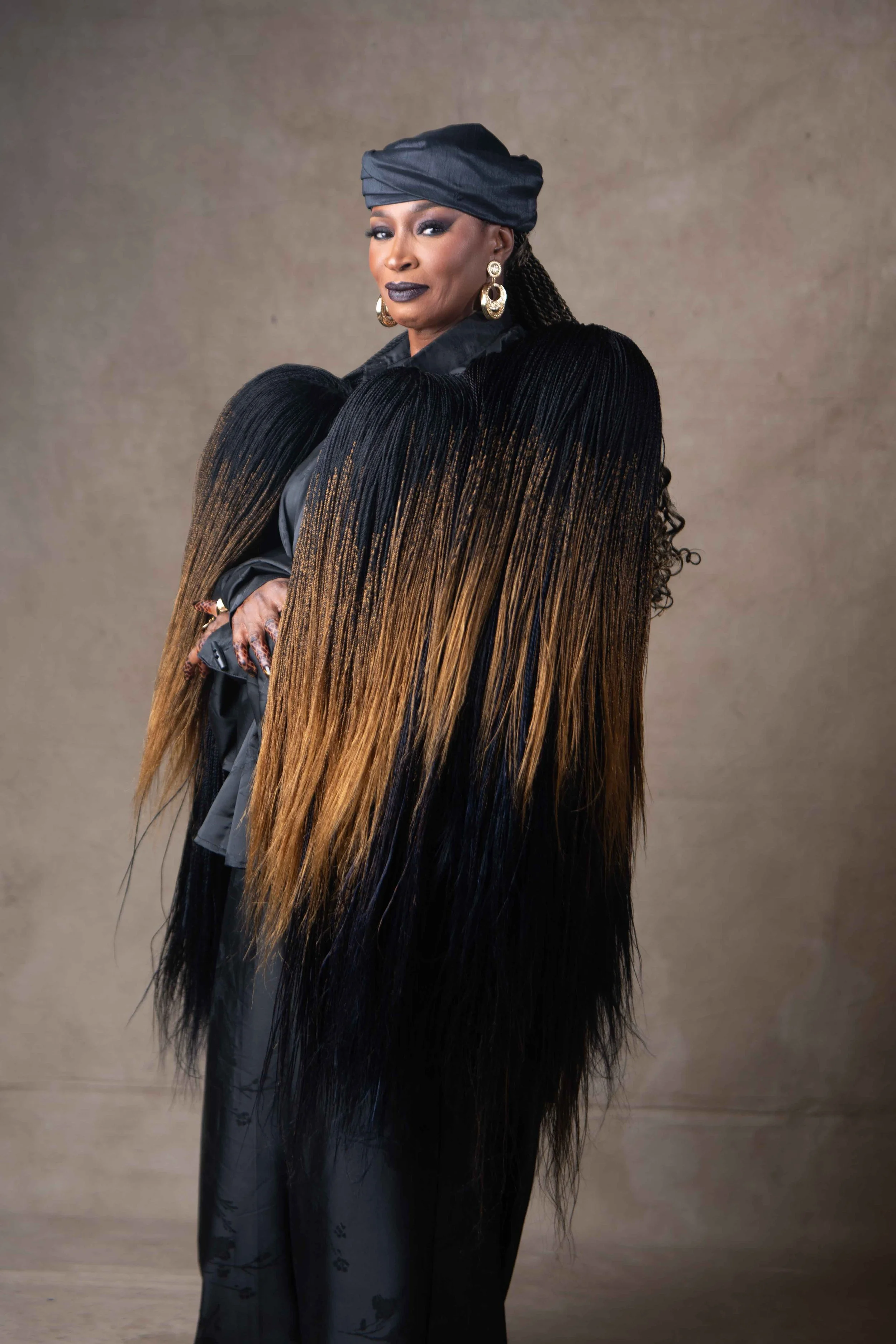
Marcia Kure Photographed by ©Buzu Ameh 2025
Marcia Kure lives and works between the United States and Nigeria. Her practice repositions drawing as a system of inscription through which materials are condensed, rerouted, and made to bear weight. She engages synthetic hair, indigo, kola nut, and gold as active agents within systems of circulation and material exchange. Her practice approaches substrate not as passive surface but as infrastructure, a site where histories accumulate and spatial relations are pressurized and reorganized. Across large-scale drawing, sculpture, and installation, Kure extends inscription from surface to structure.
Kure’s work will be included in the 61st International Art Exhibition of La Biennale di Venezia (2026). In addition to solo exhibitions in Nigeria, Germany, the Netherlands, England, and the United States, her work has been presented at La Triennale, Paris (2013); the International Biennial of Contemporary Art, Seville (2006); and the Sharjah Biennial (2005). She participated in the 11th Dak’Art Biennale, Dakar (2014), and was included in the traveling exhibition Body Talk, shown at WIELS Contemporary Art Centre, Brussels; Frac Lorraine, Metz; and Lunds Konsthall, Sweden. She also participated in Not a Single Story at Wanås Konst, Sweden, and NIROX Sculpture Park, Johannesburg (2018–19).
Kure served as visiting professor at the Royal Institute of Art, Stockholm (2019–20). She was a Research Fellow at the Smithsonian Institution (2008), a Visual Artist in Residence at the Victoria and Albert Museum, London (2014), and the recipient of the Uche Okeke Prize for Drawing (1994).
Her work is held in the permanent collections of the British Museum, London; Centre Pompidou, Paris; the National Museum of African Art, Smithsonian Institution, Washington, D.C.; the High Museum of Art, Atlanta; the Newark Museum of Art; the Hood Museum of Art, Dartmouth College; the Princeton University Art Museum; the Spelman College Museum of Fine Art; the Block Museum of Art, Northwestern University; Iwalewahaus, Bayreuth; Frac Lorraine, Metz; and the Menil Collection, Houston, among others.
Marcia Kure at the 61st La Biennale d'Arte di Venezia: In Minor Keys, Curated by Koyo Kouoh
Current Exhibition
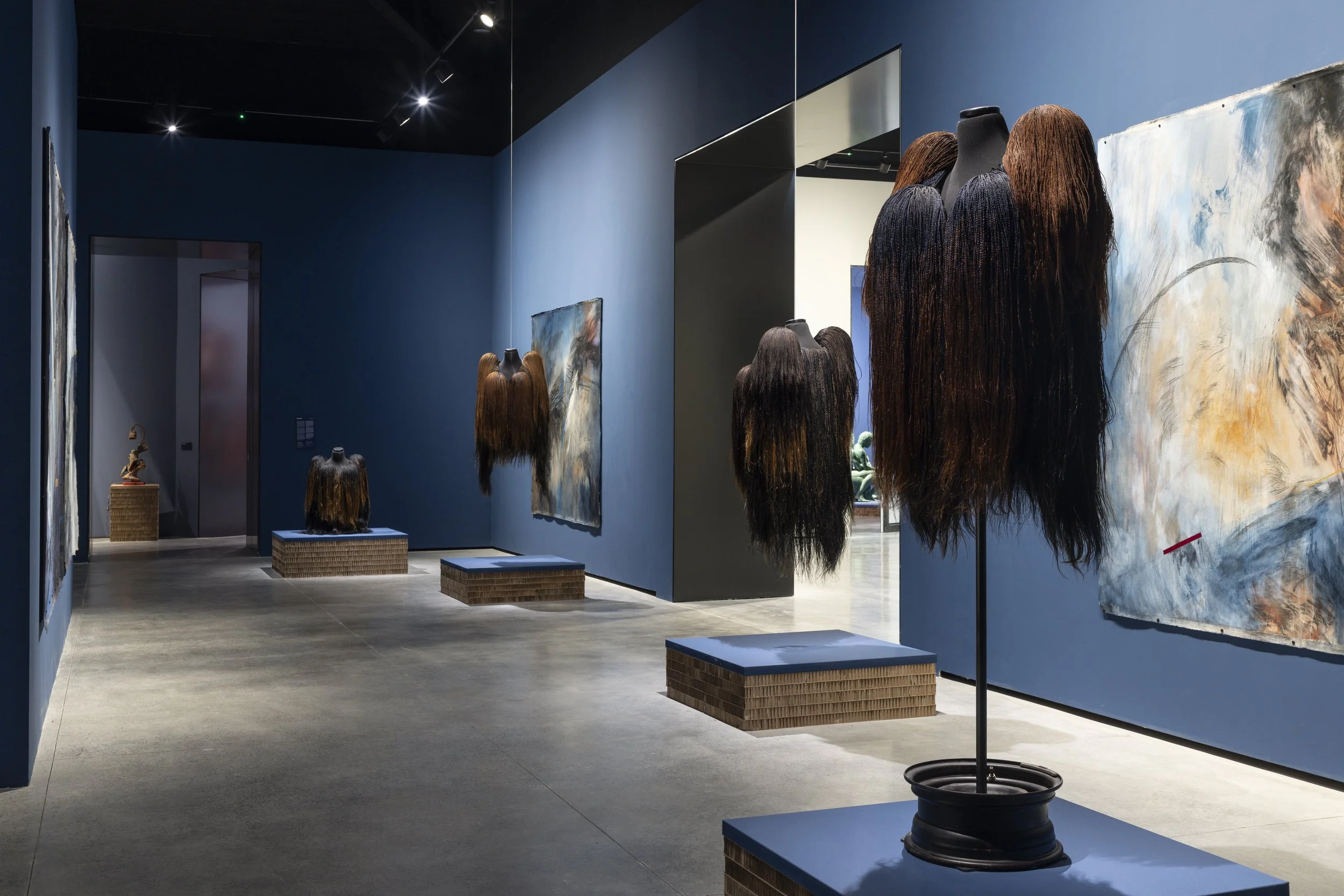
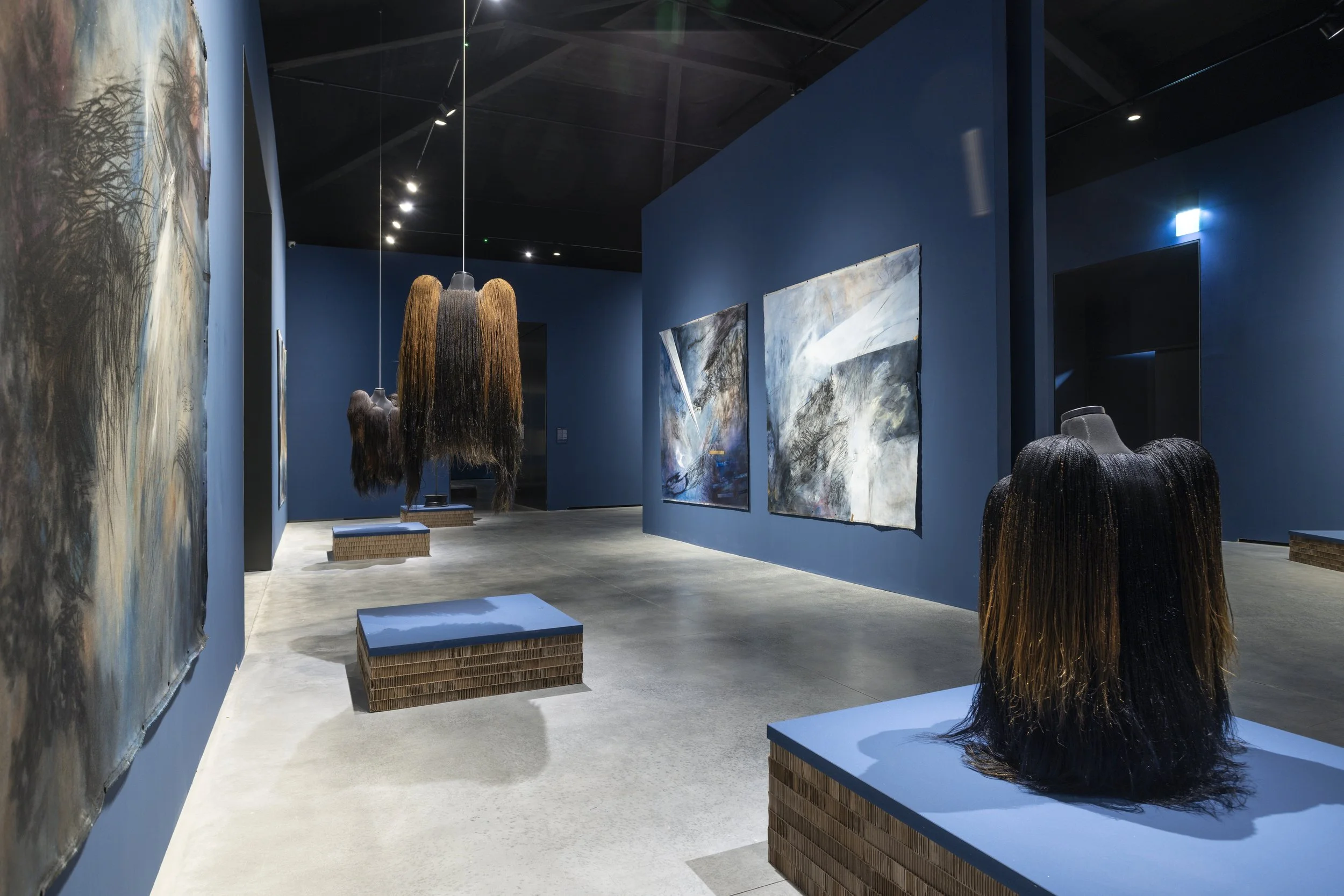
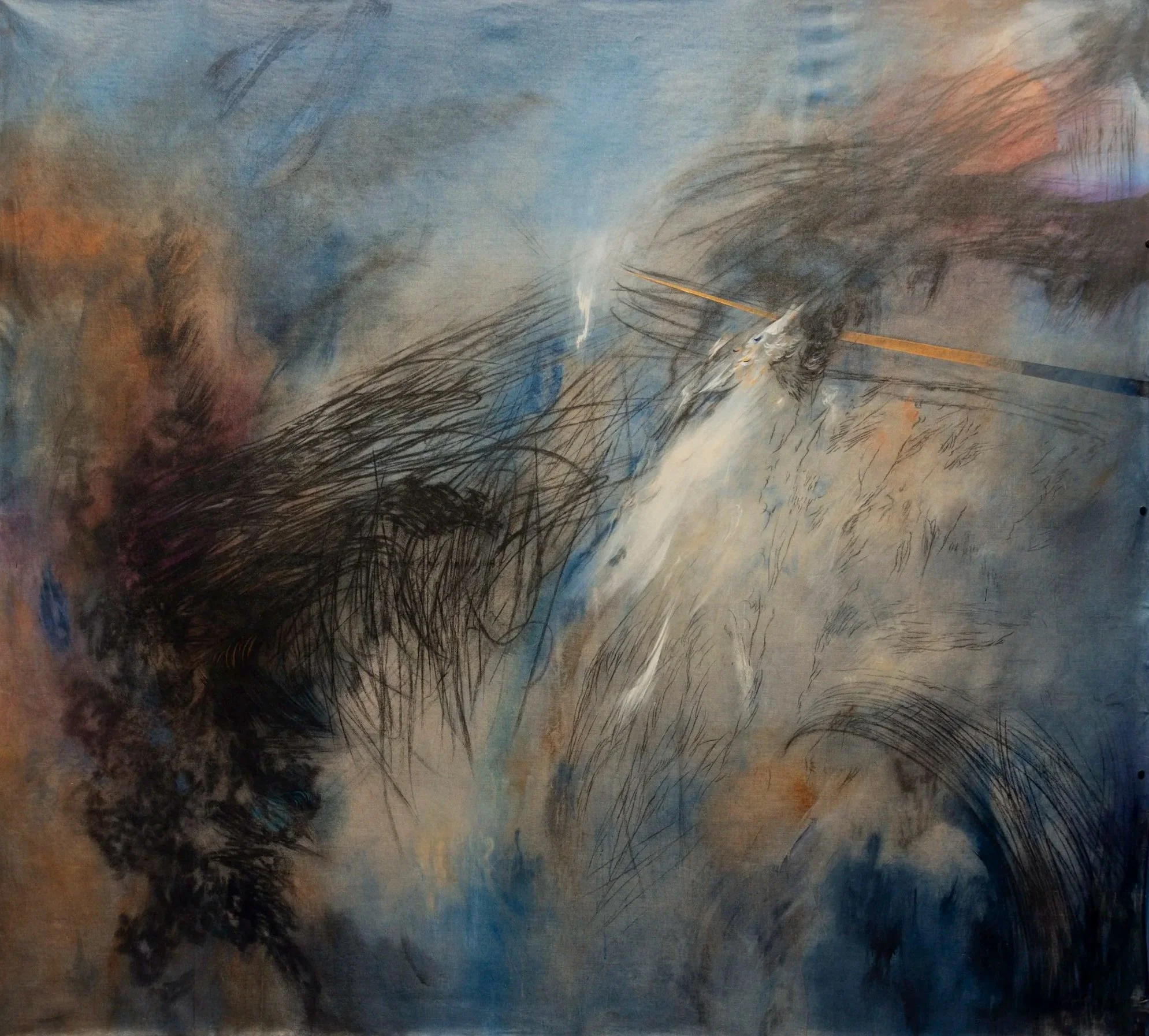
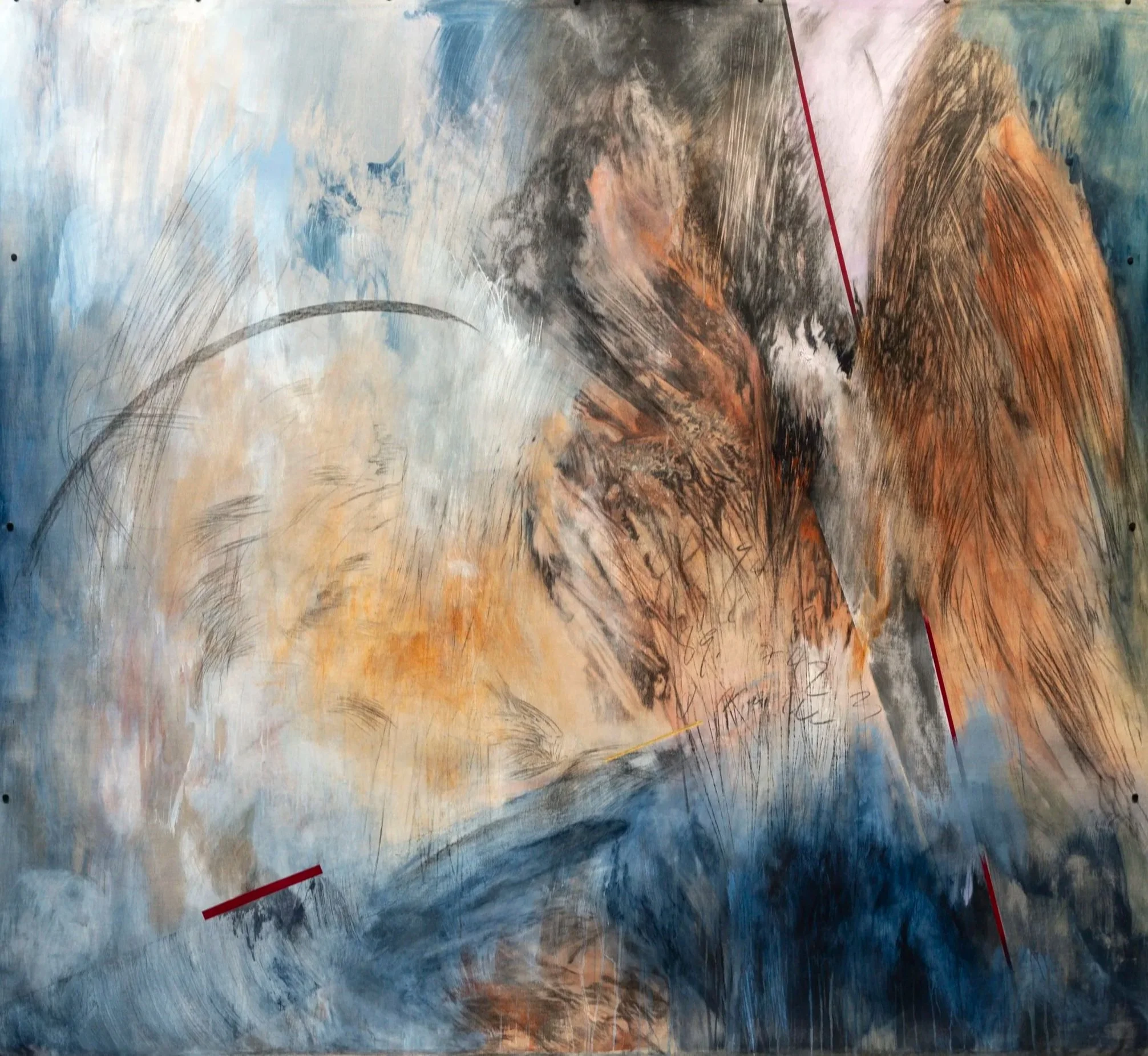
Read more about the Network V La Biennale d'Arte di Venezia, In Minor Keys
Marcia Kure at the 61st La Biennale d'Arte di Venezia: In Minor Keys, Curated by Koyo Kouoh
Past Projects & Exhibitions
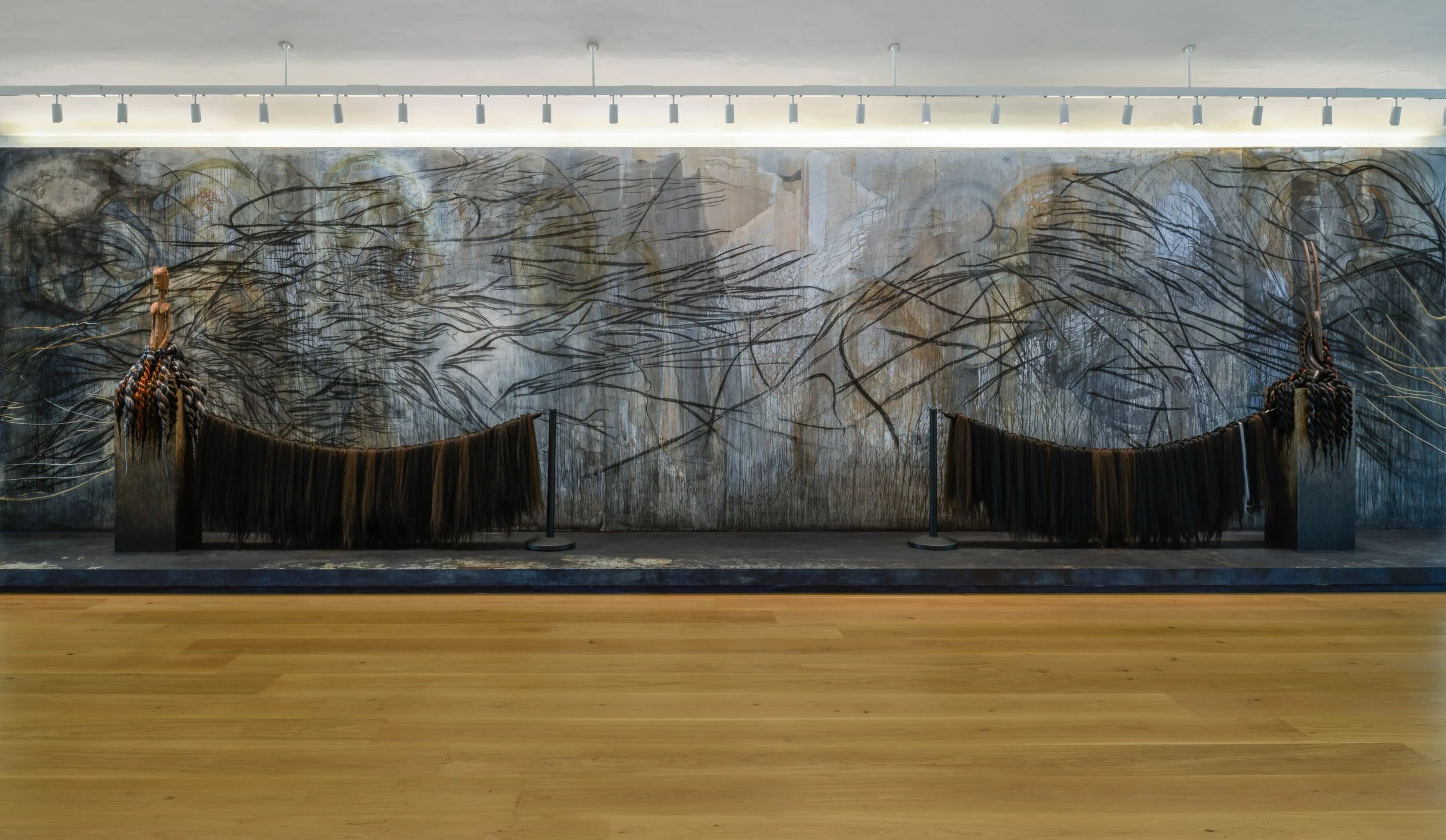
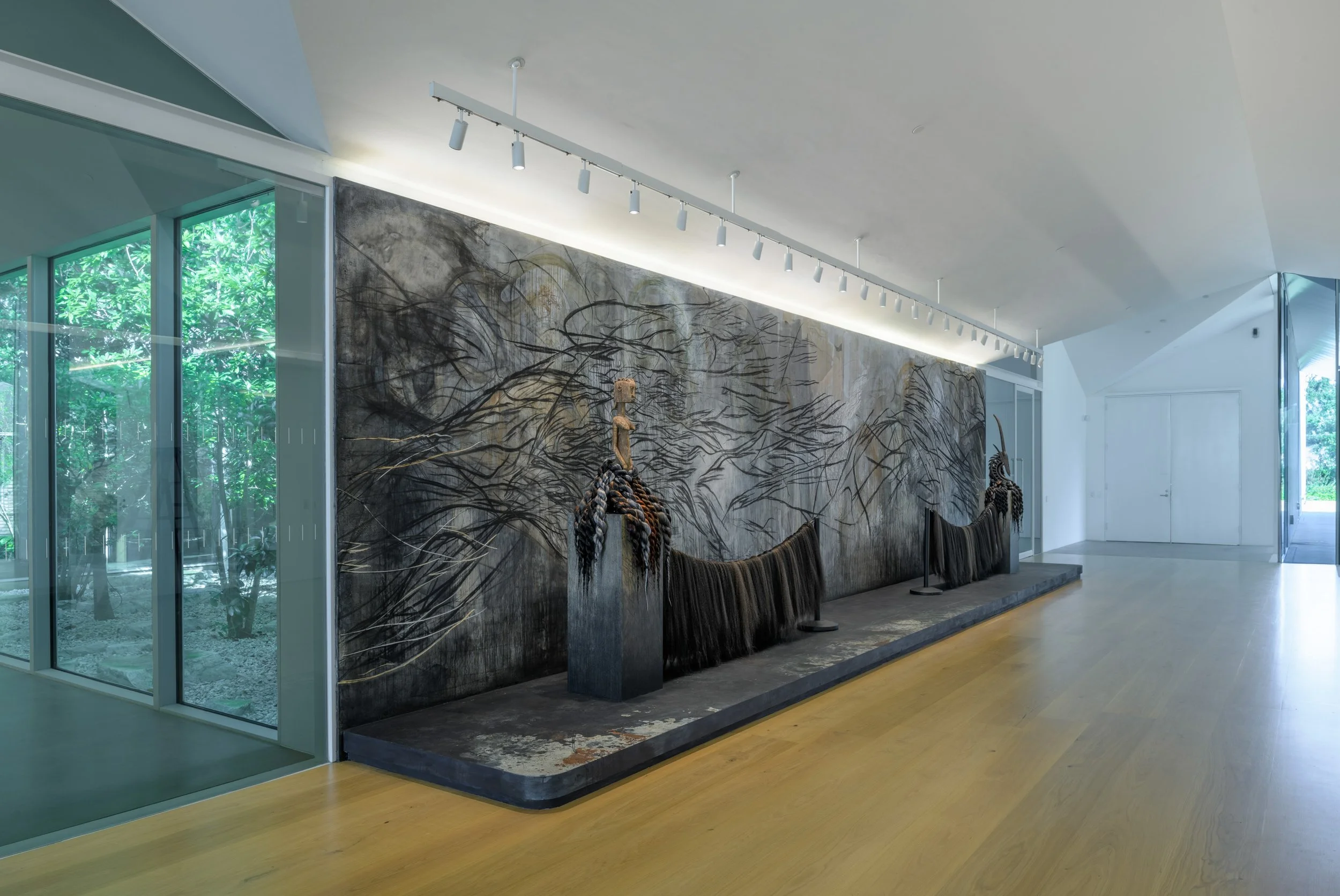
Menil Wall Drawing,
Menil Drawing Institute, Houston, Texas, 2021
Menil Wall Drawing, NETWORK
Menil Drawing Institute, Houston, Texas, 2021
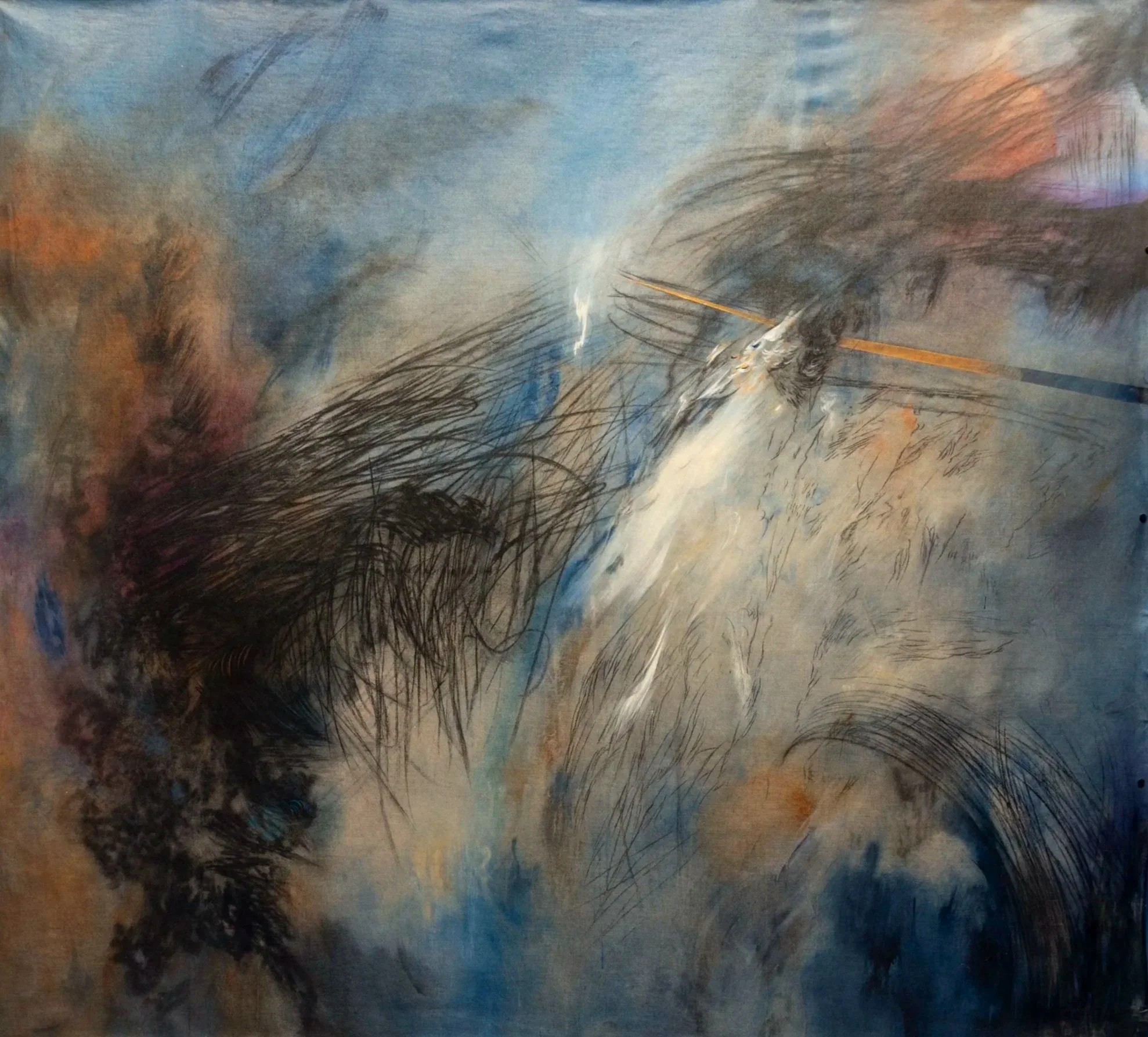
NETWORK traces the line as a system of inscription, tracing contemporary and historical trade routes across the wall. Kola nut, indigo, tea, and charcoal function simultaneously as drawing media and material substance, each carrying embedded histories of cultivation, extraction, and circulation that move through and beyond the African diaspora.
The work makes visible the infrastructures that connect bodies, goods, and knowledge across time. Routes accumulate into networks; networks carry histories of migration, labor, and exchange that continue to shape the present.
Two sculptural figures on pedestals extend this logic into three dimensions: one evoking a Mande headdress, the other a Dogon female figure, both altered through the addition of synthetic hair. The intervention places these forms within the same systems the drawing traces, folding ancestral knowledge and material culture into contemporary networks of circulation the work inhabits.
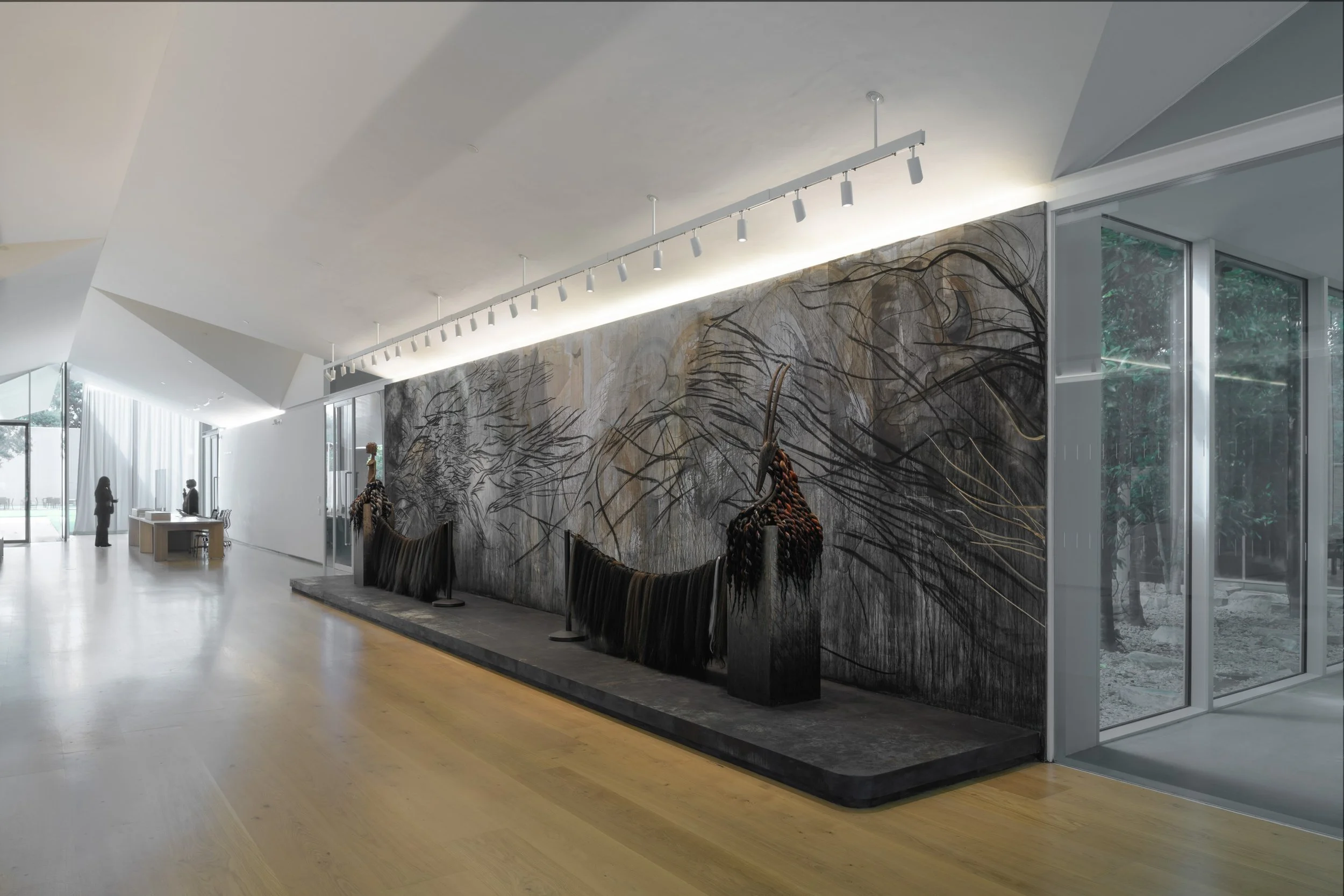
Alexander McQueen, Process
London, 2022
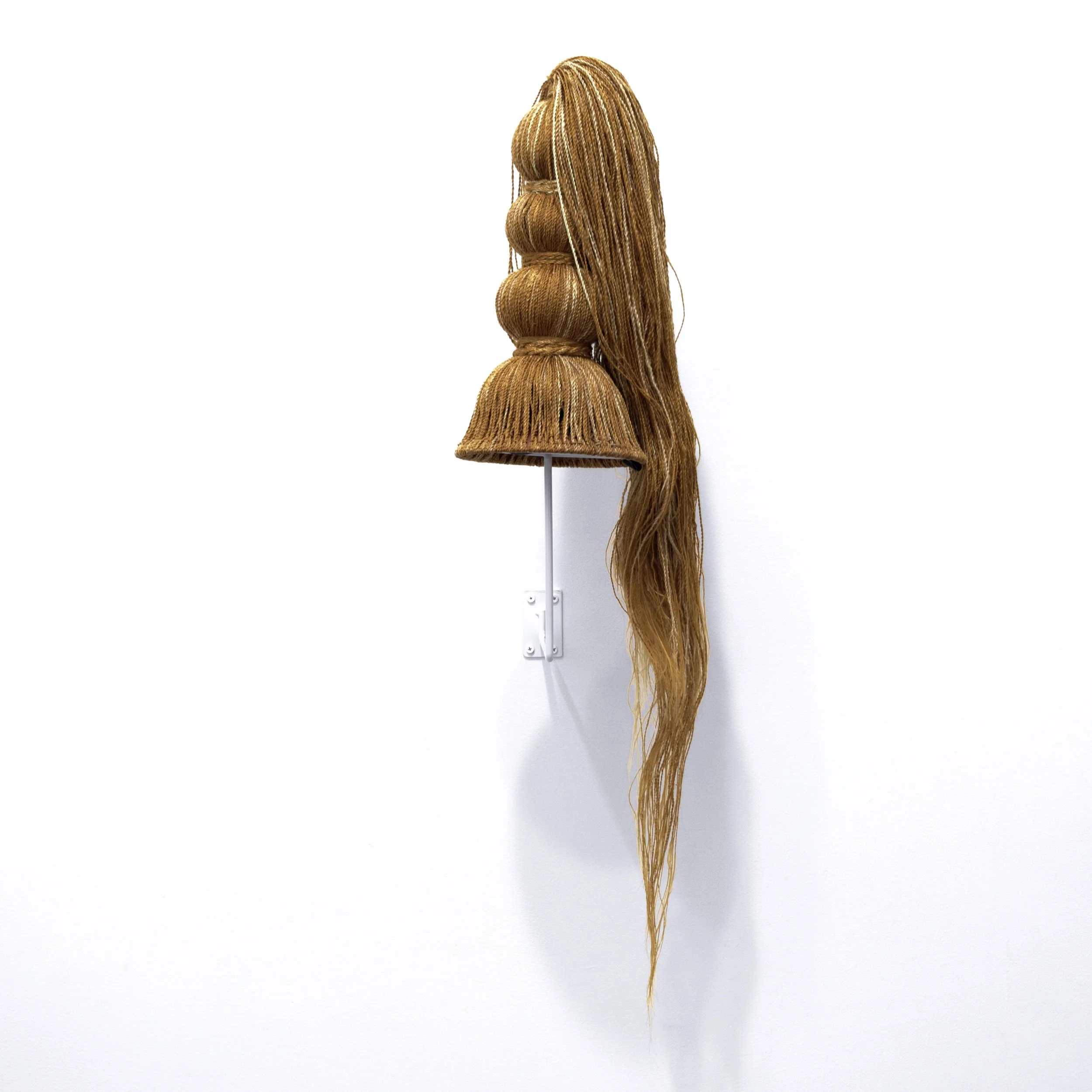
For the 2022 Process, Alexander McQueen creative director Sarah Burton invited twelve international artists to reinterpret looks from the Pre-Autumn/Winter 2022 collection. Their works were displayed alongside the garments, bringing the collection into dialogue with practices spanning painting, photography, sculpture, and drawing.
The participating artists were Ann Cathrin November Høibo, Beverly Semmes, Bingyi, Cristina de Middel, Guinevere van Seenus, Hope Gangloff, Jackie Nickerson, Jennie Jieun Lee, Judas Companion, Marcela Correa, Marcia Kure, and Marcia Michael.

Reticulation
Susan Inglett Gallery, New York 2022
Reticulation investigates the networks of exchange constituted through colonial violence, tracing the conditions they produced into the present. Through works on paper, drawing, collage, and sculpture, Kure employs the line as a system of inscription through which material histories are carried forward. Working with canvas and paper soaked in indigo and kola nut, she anchors her practice in commodities whose histories are inseparable from the forced movement of bodies across the Atlantic.
Kure treats her materials as archives rather than media. Indigo is exemplary: introduced to European markets through trade with India, it became sufficiently valued that colonial settlers began cultivating it in North America to secure a cheaper supply. The crop's labor-intensive extraction accelerated the importation of enslaved Africans to the southern colonies during the mid-eighteenth century indigo boom. By working with indigo, Kure insists on this history, the displacement of bodies, the violence of extraction, the reorganization of land and labor in service of a color, embedding it as pressure within the work itself.
News & Updates
For News and Updates on Marcia Kure
Select News or Press below ↓
Studio Notes
Studio Notes is evolving writing that examines drawing as a field of thought shaped by material process, inscription, and the systems that condition how form comes into being. It traces the entanglement of matter, language, labor, and circulation, attending to how surfaces carry histories and how marks register broader structures of relation. Working across fragments, reflections, and extended texts, it treats drawing as a site where meaning is continuously formed, tested, and reconfigured.
For Studio Notes, click below ↓