Drawing, Writing, and Trace
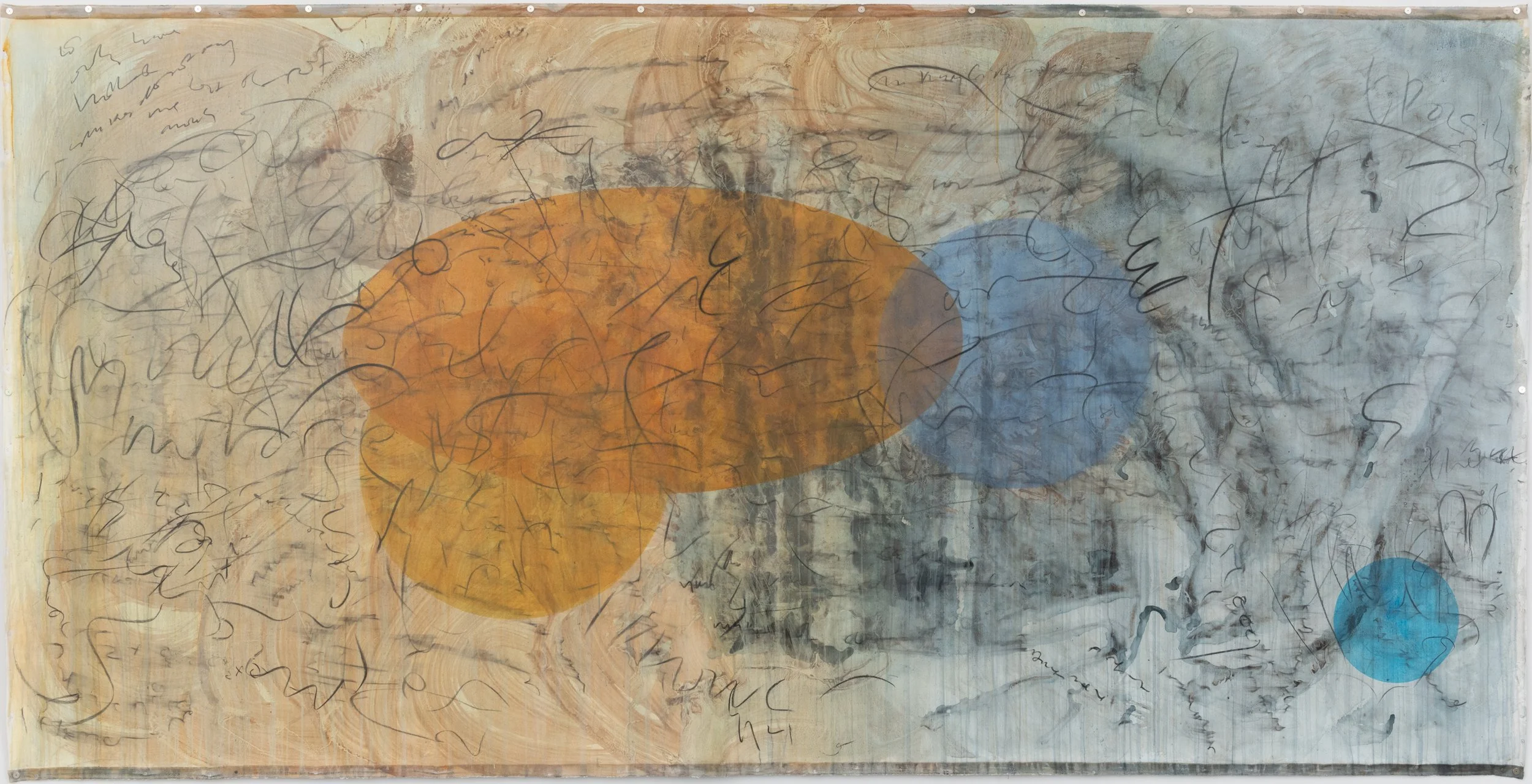
MARCIA KURE, Reticulation, 2022. Collection High Museum of Art, Atlanta
While unbinding sheets of paper that had been compressed and repeatedly immersed in indigo, I noticed that the deepest concentrations of pigment appeared in areas the hand had barely touched. Pressure, moisture, and the fibers' tension had already organized the surface before drawing, in the conventional sense, began. The paper was carrying a record of contact prior to intention.
I keep returning to this condition because it unsettles the distinction between drawing and writing in ways that feel increasingly difficult to stabilize.
The separation between them often appears self-evident. Drawing belongs to the visual. Writing belongs to language. Yet both begin in the same place: a body moving across a surface, leaving a trace through contact. The trace itself does not announce whether it belongs to image or script. That distinction is assigned later, through systems that organize how marks are read.
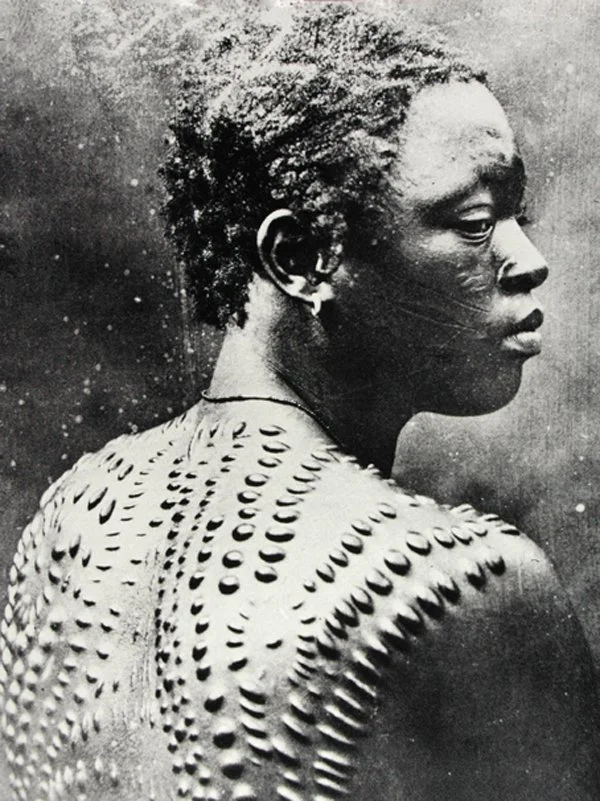
Taabwa Woman, Democratic Republic of Congo
Photographer unknown, courtesy of Allen F. Roberts and the Central Archives of the White Fathers (Missionaries of Our Lady of Africa), Rome. Pitts Rivers Museum Virtual Collection
This becomes visible in early inscription systems. Proto-cuneiform emerged from pictographic and numerical signs used for accounting before developing more abstract and phonetic forms. Egyptian hieroglyphs hold image, sound, and semantic function together simultaneously. Some Chinese characters retain visible connections to earlier pictographic forms even as the script developed increasingly complex semantic-phonetic structures. Nsibidi moves across pictographic, ideographic, performative, and social registers without conforming fully to either image or writing. These systems do not collapse drawing and writing into the same thing, but they do suggest that the boundary between them is historically produced rather than fixed.
What interests me is not simply the history of these systems, but the conditions that make traces legible in the first place.
In the studio, a trace rarely arrives under stable conditions. Pigment disperses unevenly. Fibers absorb and reopen. Pressure shifts. Surfaces resist. Marks accumulate through contact between materials whose behavior cannot be fully predicted or repeated. The trace forms before its meaning stabilizes. Drawing and writing diverge later, through the structures that organize traces into legibility.
This is partly why I have become increasingly interested in inscription as a condition rather than as a category. Here, I do not mean inscription as a term for all marks. The distinction matters. Inscription begins when traces are organized within systems of legibility, memory, and relation. What falls outside that structure is something prior: the unrecruited mark, the trace that has not yet been gathered into meaning.
While thinking through this, I kept returning to bodily systems of marking. In Uli, gesture and surface operate together as a social and visual system. Meaning emerges relationally rather than through isolated marks. The body does not simply receive inscription; its social meaning is reorganized through it. Among the Luba and Taabwa communities, scarification and hairstyling similarly accumulate over time, registering shifts in memory, relation, and status. What these systems make visible is that inscription is never fully complete. Surfaces remain open to reorganization, addition, and encounter.
I began noticing a similar logic while looking at cloth.
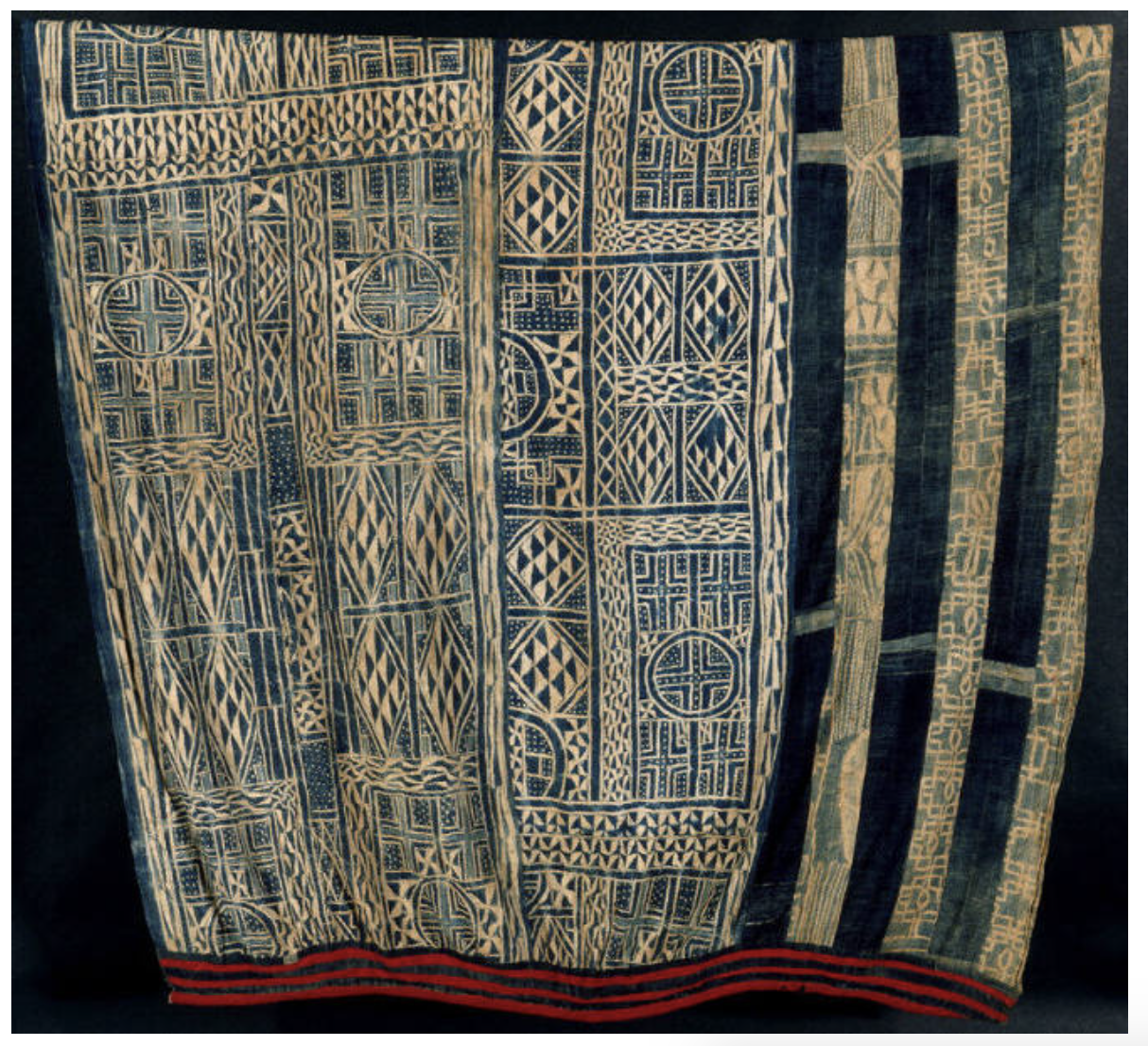
Ndop, Bamum, Bamileke artist, 20th century, Hand-woven, indigo, cotton. Collection North Carolina Museum of Art
Ndop and Adire both organize meaning through structured variation across the surface. Units are repeated, altered, and repositioned. Meaning does not reside in a single motif but in the relation between motifs across the field. I began thinking about this again while looking closely at Look 36 from Alexander McQueen’s pre-autumn/winter 2022 womenswear collection. The marks across the garment are not readable as static symbols placed onto fabric. Their legibility depends on the body inhabiting the garment. Seams, folds, tension, posture, and movement continuously reorganize the surface. The garment cannot be read flat. The inscriptive field shifts as the body moves beneath it.
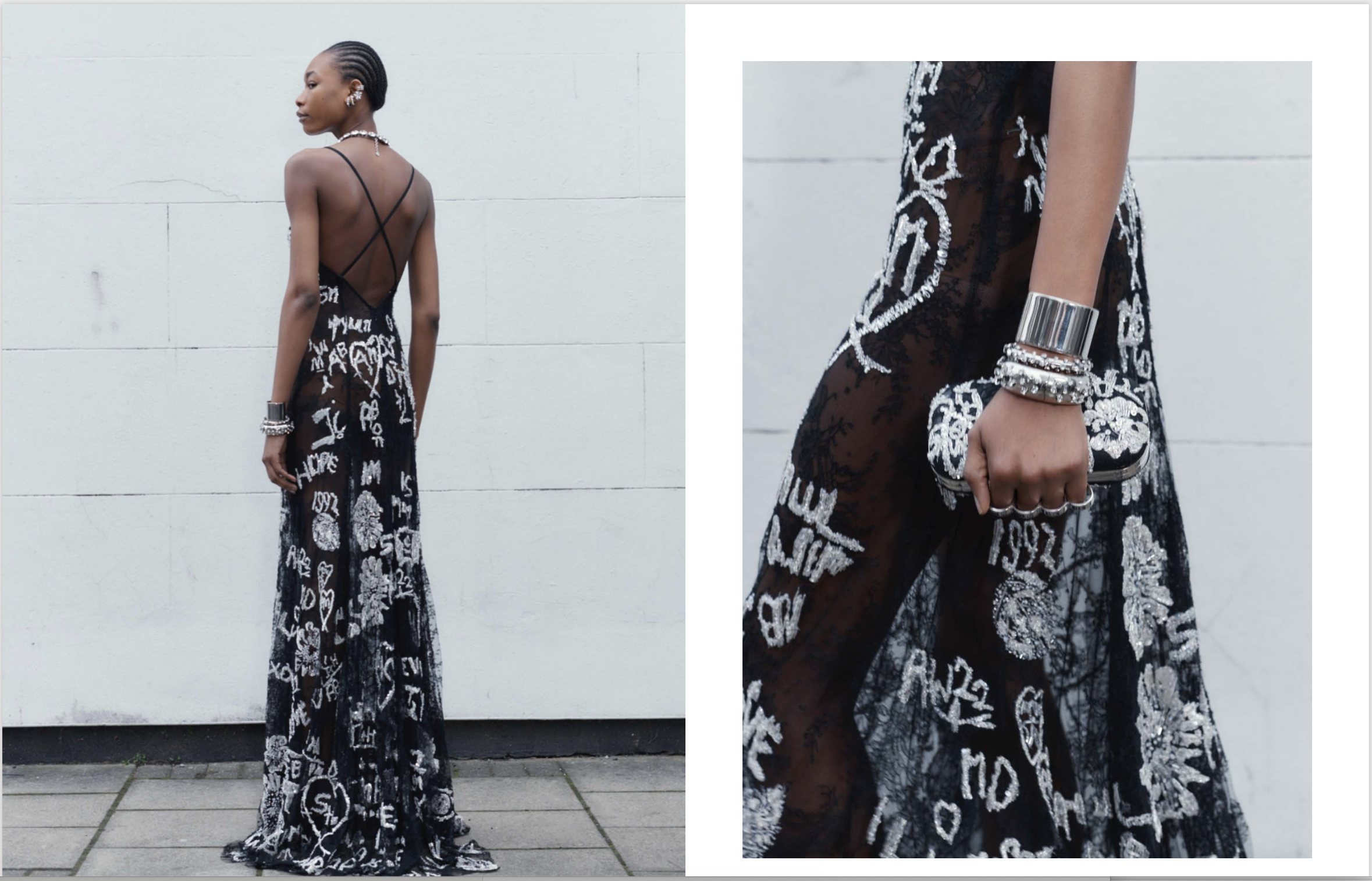
Look 36 Alexander McQueen PROCESS pre-autumn/winter 2022 women’s wear collection
I am less interested in claiming continuity between these systems than in understanding a shared operation: the organization of traces across surfaces whose meaning emerges relationally rather than independently.
This question became materially unavoidable while working on Network at the Menil Drawing Institute.
The substrate was saturated, repeatedly splashed, and glazed in pigment before any intentional mark entered the surface. Pigment accumulated unevenly across wood and fiber depending on exposure, resistance, and pressure. What became clear through the process was that the surface was already carrying inscriptions before drawing, in the conventional sense, had begun. The material had already recorded immersion, seepage, compression, and duration.
The gouge marks entered that field afterward.
They did not write onto emptiness. They cut through an existing accumulation of traces.
The gouge enacted force differently from the drawn line. Gouged marks severed, opened, and exposed. Drawn lines mapped movement without the irreversibility of the cut. The surface held both operations simultaneously without resolving them into a single system.
The same was true of the pigments. Indigo and kola nut did not function as symbolic references to trade or exchange. Their material behavior already carried those histories within them: cultivation, circulation, extraction, labor, movement across routes and infrastructures. The drawing did not illustrate those conditions from a distance. It was produced through them.
What remains after the hand withdraws is not simply expression. The surface continues to reorganize itself through absorption, residue, pressure, and accumulation. Pigment settles into fibers unevenly. Compression leaves densities that subsequent marks cannot fully erase. Meaning persists not as resolution but as residue.